Boat Launch Basics: What Travelers Need to Know Before a Lake Day
Few outdoor activities capture the feeling of a relaxed summer day quite like launching a boat and heading out onto a lake. Whether the plan involves fishing, cruising, watersports, or simply drifting across calm water with a cooler and good company, a successful lake day usually starts at the same place: the boat launch ramp. For experienced boaters, using a launch ramp is routine. For travelers renting a boat, borrowing one, or visiting a new lake for the first time, the launch process can feel surprisingly technical. Small mistakes at a busy ramp can slow everyone down, cause stress, or in the worst cases lead to equipment damage, unsafe situations, and a rough start to what should have been an easy day on the water.
Understanding the basics of how boat launches work removes most of that pressure. Public launch ramps are designed to make it possible for trailers to back boats safely into the water, but they require preparation, awareness, and a bit of coordination. During peak travel seasons, popular lakes may see a constant stream of boaters in the morning, which means efficiency and etiquette become just as important as technical skill. Knowing what to expect before arriving at the ramp makes the experience smoother not only for you but for every other boater waiting their turn. It also gives first time lake travelers the confidence to focus on the fun part of the day rather than worrying that they are about to become the person everyone at the ramp silently remembers.
This guide explains how boat launches work, what travelers should prepare before arriving at the ramp, how the launch process typically unfolds, what safety and etiquette rules matter most, and what practical mistakes to avoid. It also covers how to choose the right launch, what fees or permits may apply, and how to think through a full lake day from parking lot to afternoon return. Whether you are bringing your own boat or renting one near a vacation destination, understanding the launch process ensures the lake day begins calmly rather than chaotically.
Why Understanding Boat Launch Basics Matters
Boat ramps operate very differently from most recreational facilities. Unlike parking lots or marina docks, launch ramps are designed to move vehicles, trailers, and boats through a relatively small area efficiently. When multiple boats arrive at the same time, especially during weekends, summer holidays, and peak vacation periods, even small delays can create long backups. That is why experienced boaters often prepare their boats away from the ramp itself, complete their checks before backing down, and move quickly once the boat enters the water. A ramp works best when every boater treats it like a shared access point rather than a private setup area.
Safety is another major reason preparation matters. A boat trailer entering the water at the wrong angle, loose equipment sliding during launch, or a forgotten drain plug can quickly turn a simple launch into a stressful situation. Many lakes also have ramps with varying slope angles, underwater drop offs, or slippery algae covered surfaces that reduce traction. Understanding how ramps function helps drivers position trailers correctly, avoid common hazards, and make better decisions about whether they need a spotter, a second person, or even a quieter ramp for a first attempt.
For travelers visiting unfamiliar lakes, preparation also saves time and reduces frustration. Not every launch facility offers the same amenities. Some include large parking areas, multiple ramp lanes, courtesy docks, restrooms, fish cleaning stations, and staging zones where boaters can secure vessels temporarily while parking their vehicles. Others may have only a single narrow ramp with limited staging space and no nearby services at all. Checking the ramp setup ahead of time makes the entire lake day easier to plan and often helps travelers avoid choosing a launch that looks fine on a map but feels completely wrong for a busy weekend outing.
Boat Launch Basics: What Travelers Need to Know Before a Lake Day
What a Typical Boat Launch Ramp Looks Like
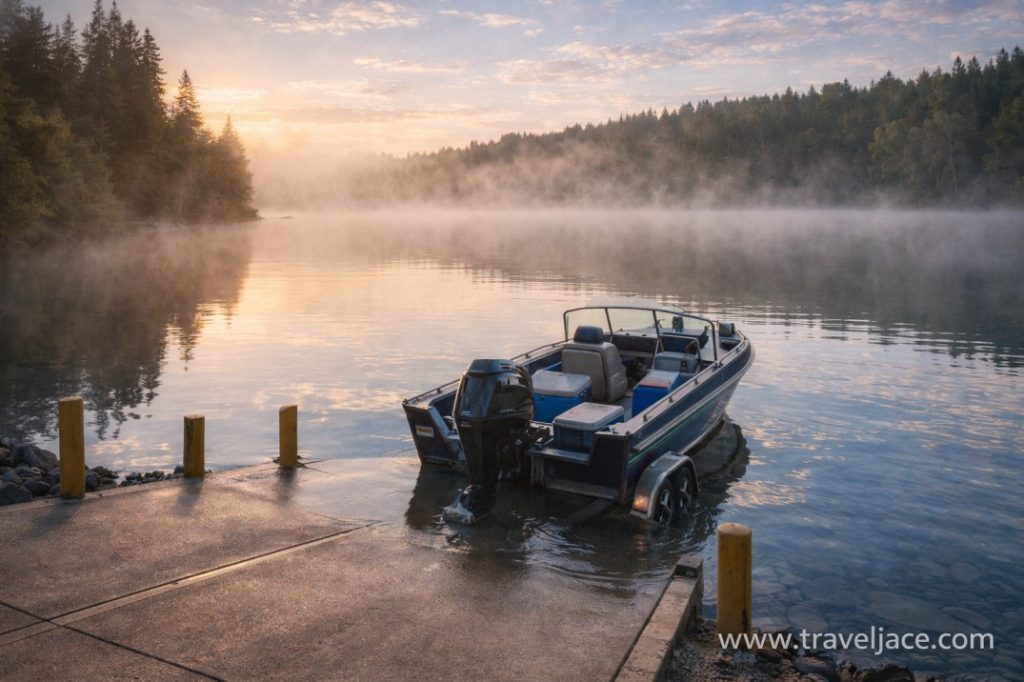
Most public boat launch ramps follow a similar layout designed to keep traffic flowing smoothly. The main feature is the sloped concrete ramp extending into the water where trailers back down to launch boats. Larger lakes often include multiple ramp lanes, allowing several boats to launch simultaneously during busy periods, while smaller lakes may have only a single lane ramp that demands more patience and better timing. The ramp may continue deeper into the water than you can see from shore, so understanding water depth and trailer position becomes part of the launch routine.
Nearby staging areas are typically where boaters prepare their boats before approaching the ramp. These areas allow drivers to remove travel covers, install drain plugs, load gear, disconnect trailer tie downs, attach dock lines, and brief passengers without blocking the actual launch lane. Courtesy docks are also common at many launches. These floating docks allow boaters to tie their boats temporarily while the driver parks the vehicle and trailer, which keeps the ramp moving and reduces the temptation to leave the boat drifting awkwardly near the launch.
Parking areas for vehicles and trailers are usually located slightly away from the water to keep the ramp area clear. At popular lakes, these lots can fill quickly during summer weekends and special event periods, especially at well known fishing reservoirs or large recreation lakes near cities. That means launch choice is not only about water access. It is also about how easy it will be to park, retrieve the boat later, and exit without spending half the afternoon in a trailer traffic jam.
Boat Launch Checklist Before You Leave Home
A successful launch usually starts long before the trailer reaches the ramp. One of the best ways to avoid problems is to use a simple pre departure checklist at home or before leaving your accommodation. Confirm that the trailer lights are working, the tires are inflated properly, the wheel bearings are in good condition, the hitch is locked securely, and the safety chains are attached correctly. These details may feel routine, but overlooking them can create a far bigger problem on the road than anything that happens at the lake.
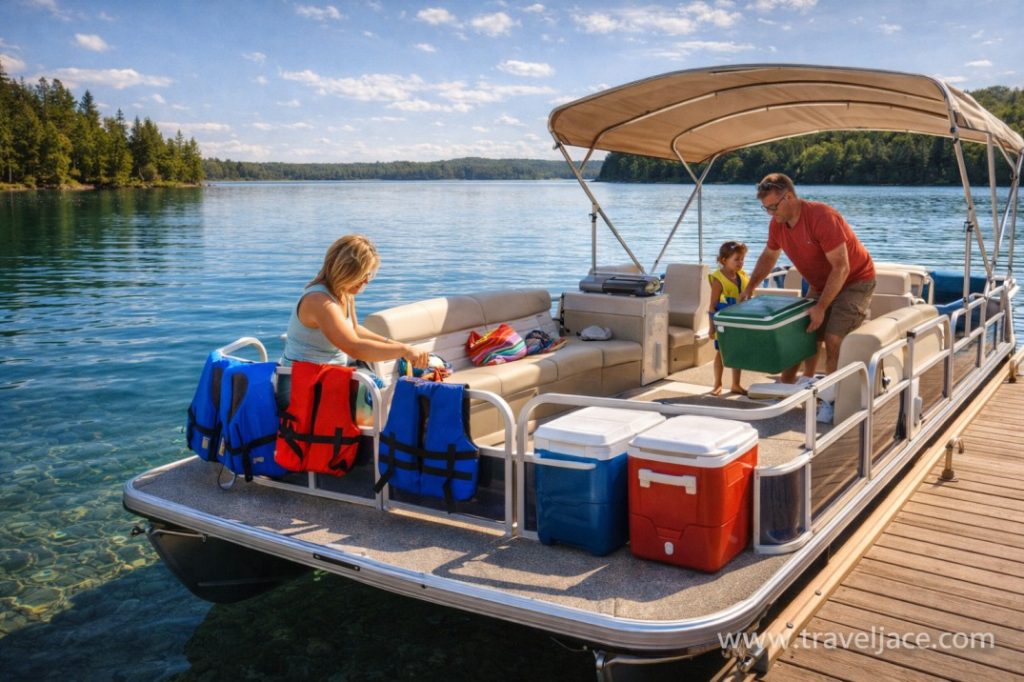
Boat readiness matters just as much. Check that the battery is charged, fuel levels are sufficient for the day, required safety gear is onboard, and the drain plug is packed where you will actually remember it. Life jackets should be accessible, not buried under bags or tangled in storage. If the boat has electronics, navigation lights, or a trolling motor, testing those systems early can save frustration later. Travelers using rented boats should verify what is included and what they are expected to bring themselves, because not every rental setup is equally comprehensive.
It is also smart to think through the full lake day rather than only the launch. Bring drinking water, sunscreen, weather appropriate clothing, a throwable flotation device if required, a first aid kit, dock lines, and basic tools. If children are coming, pack with the lake environment in mind rather than assuming the shoreline will supply everything you forgot. A good checklist is not about paranoia. It is about making the day feel easy once you arrive.
Preparing Your Boat Before Reaching the Ramp
One of the most important rules at any boat launch is simple: prepare your boat before entering the ramp lane. Experienced boaters often perform a quick checklist in the staging area so the actual launch process takes only a minute or two. This preparation typically includes inserting the boat’s drain plug, loading gear and safety equipment, checking fuel levels, ensuring life jackets are accessible, and confirming that the keys are where someone can actually find them without creating a scene at the worst possible moment.
Trailer tie down straps and safety chains should also be loosened or removed before reaching the ramp. These straps keep the boat secure during travel but must be detached before the boat can float off the trailer. Many boaters also attach dock lines and prepare fenders before launching so the boat can be secured easily once it reaches the water. If another person is helping, this is also the right time to agree on roles rather than improvising them halfway down the ramp with an audience.
Another important preparation step involves confirming the boat’s engine can start properly. A quick test start while the boat is still on the trailer can confirm the engine is functioning before the boat reaches open water, though it should only be run briefly and appropriately. If the engine fails after launch, the day can go from exciting to embarrassing very quickly, especially if the boat is blocking the courtesy dock while everyone pretends to stay calm. Good preparation prevents most of that drama.
Boat Launch Basics: What Travelers Need to Know Before a Lake Day
The Basic Boat Launch Process Step by Step
Launching a boat follows a straightforward sequence once preparation is complete. The driver carefully backs the trailer down the ramp until the boat begins to float off the trailer bunks or rollers. The exact depth depends on the type of trailer, the size of the boat, the slope of the ramp, and water level conditions. Back too little and the boat may refuse to move. Back too far and the trailer, vehicle, or both may end up working harder than necessary. This is why slow, steady backing is almost always better than trying to finish the maneuver quickly.
Once the boat is partially floating, the driver may either release the boat manually or have another person guide it off using a dock line. In some cases, the boat’s engine is started immediately and the boat is moved to the courtesy dock. In others, especially on quieter ramps or with smaller boats, the boat may simply be walked to the dock or held briefly near shore while the vehicle is parked. What matters most is keeping the ramp lane clear as soon as it is safe to do so.
After the boat is floating freely, it can be moved to the courtesy dock or held briefly near the ramp while the driver parks the vehicle and trailer. Once parked, the driver returns to the dock and boards the boat. At this point, the lake day officially begins. The steps themselves are simple, but the key to a smooth launch is efficiency. Drivers who prepare everything beforehand and move calmly through the process help keep the ramp operating smoothly for everyone.
Boat Ramp Etiquette Most Beginners Get Wrong
The most common etiquette mistake is treating the ramp as if it is the place to figure everything out. It is not. The ramp is the place to launch and retrieve. The staging area is where you organize gear, discuss the plan, put in the drain plug, and decide who is holding the lines. Spending too long on the ramp doing slow preparation is one of the fastest ways to irritate every other boater in sight.
Another common mistake is leaving the boat tied to the courtesy dock for too long while the crew reorganizes bags, changes clothes, or debates where to sit. Courtesy docks are meant for brief loading and transition, not for extended occupation. On busy days, a quick launch followed by quick movement away from the dock is one of the easiest ways to show respect for other boaters and keep the whole area functioning smoothly.
Beginners also sometimes underestimate how much communication matters. Clear hand signals, simple directions, and calm coordination are far more useful than shouting vague instructions across wind, water, and engine noise. The launch ramp is not improved by panic volume. A little planning and a little humility go a long way, especially when the lake is busy and everybody wants the same thing: to get on the water without unnecessary delay.
Common Boat Launch Mistakes to Avoid
One of the most common mistakes travelers make is blocking the ramp while preparing gear. Ramps are meant for launching and retrieving boats, not for loading coolers, assembling fishing gear, or searching for sunscreen in three different bags while pretending the whole thing is going smoothly. Completing these tasks in the staging area helps keep the ramp clear and prevents frustration among other boaters.
Another frequent mistake involves forgetting the drain plug. Without it, water can quickly fill the boat once it enters the lake. This small oversight is one of the most well known boating mishaps and is entirely avoidable with a simple pre launch checklist. Similarly, forgetting dock lines, removing the winch strap too early, or failing to test the engine can create their own versions of ramp chaos.
Backing the trailer too quickly is another problem that can cause unnecessary stress. Boat ramps can be slippery, and sudden movements may cause trailers to misalign or slide. Taking the backing process slowly and steadily usually produces better results. Another mistake is choosing the busiest possible launch for a first ever attempt. If you are new, a quieter weekday ramp is a much kinder learning environment than a packed holiday morning where everybody behind you has opinions.
How to Choose the Right Boat Launch
Not all boat launches offer the same experience, especially at larger lakes. Some launches provide multiple ramp lanes, spacious parking areas, restrooms, floating docks, and generous staging space that make the process easier. Others may be smaller, less maintained, steeper, or located in ways that expose them to wind and current. The best launch is not always the closest one. It is often the one that best fits your boat, your comfort level, and the type of lake day you want.
When planning a lake trip in a new destination, it helps to research launch locations in advance. State parks, marinas, county recreation areas, and other public access sites often provide maps or facility descriptions online. Look for information on parking size, ramp slope, number of lanes, courtesy docks, fees, restrooms, and whether the launch is suitable for larger trailers. These practical details matter far more than a scenic name once you are trying to back down a ramp with other boaters waiting.
For travelers using a rented boat, the launch may already be chosen for you, but it is still worth asking what the facility is like, whether staff assist with launch procedures, and what time of day tends to be busiest. A little local knowledge can make the difference between an easy start and a stressful one.
Boat Launch Fees, Permits, and Local Rules
Boat launch access is not always free, and this is one of the most overlooked parts of lake day planning. Some public launches charge day use fees, while others require annual passes, state park entry fees, county permits, or separate parking charges for vehicles and trailers. In certain destinations, payment may be made at a kiosk, through a mobile system, or bundled into marina or park access. Travelers who assume they can simply arrive and launch may end up delayed by missing cash, no cell service, or a permit system they did not know existed.
Local rules also vary. Some lakes impose inspection procedures to prevent invasive species, especially in regions where zebra mussels and other aquatic threats are a concern. Others restrict launch hours, limit engine types, or separate motorized boating areas from quieter recreation zones. Reservoirs used for municipal water, flood control, or wildlife protection may also have their own operating rules. Checking official local information before the trip is one of the simplest ways to avoid unnecessary surprises.
For travelers, the broader point is clear: a boat launch is not just a physical ramp. It is part of a managed access system, and understanding that system ahead of time makes the day smoother. The launch process always feels easier when you arrive with the right expectations, the right paperwork, and one less thing to scramble over in the parking lot.
Practical Lake Day Tips for Travelers
For travelers planning a boating day, preparation extends beyond the launch itself. Bring plenty of water, sunscreen, and basic safety gear such as life jackets and a first aid kit. Weather conditions can change quickly on large lakes, especially in the afternoon when winds build and thunderstorms develop faster than many visitors expect. Checking the forecast before leaving the dock is always a good idea, but so is watching the sky and building in enough margin to return comfortably if conditions shift.
Fuel planning is another important consideration. Some lakes have marina fuel stations, while others may require boaters to return to shore to refuel or plan the entire outing around what is already in the tank. Knowing the boat’s fuel range and planning accordingly helps avoid unnecessary stress later in the day. For travelers on rented pontoon boats or family fishing boats, it is also helpful to ask whether fuel is included, prepaid, or billed afterward, since that can affect both cost and timing.
Food, shade, and timing matter too. A great lake day is not only about the boat. It is about how well the group handles heat, hunger, sun exposure, and transitions back to shore. Pack more water than you think you need, protect phones and valuables from spray, and think through the return process before everybody is tired. Lake days usually go best when the launch, the outing, and the retrieval are treated as parts of one plan rather than three unrelated events.
How Retrieving the Boat Works After the Lake Day
For many travelers, getting the boat into the water feels like the hard part, but retrieval can be equally important, especially when everybody is sun tired and ready to be done. The basic process reverses the launch. One person retrieves the vehicle and trailer, backs it down the ramp, and the boat is guided carefully onto the trailer before being secured with the winch strap, safety chain, and travel tie downs.
Just like launching, retrieval works best when it is efficient. Load gear and organize passengers away from the ramp whenever possible, and move to the staging area once the boat is out of the water so others can use the lane. This is where tired groups often slow down. A little discipline at the end of the day prevents frustration, keeps the ramp moving, and helps you leave with the trip still feeling smooth.
Retrieval also deserves the same attention to safety as launch. Wet ramps can be slippery, trailers may shift if backed too deep or too quickly, and tired drivers are more likely to rush. The best end of day strategy is simple: slow down just enough to do it properly, then handle final tie downs, draining, and packing away from the ramp itself.
FAQ
Do all lakes have public boat launches?
Most major recreational lakes offer at least one public boat launch, though some smaller lakes may limit access to certain areas, charge launch fees, or require permits depending on the managing authority.
Is it difficult to launch a boat for beginners?
Launching a boat can feel intimidating the first time, but with preparation, patience, and a quieter ramp, it becomes much more straightforward. Many beginners benefit from practicing at off peak times before visiting a crowded launch.
What time of day is best to use a boat launch?
Early mornings are usually the least crowded, especially on weekends and holidays when boating activity increases. They also tend to offer calmer conditions and easier parking.
What is the most common boat launch mistake?
One of the most common mistakes is forgetting the drain plug or using the ramp lane as a setup area instead of preparing in the staging area. Both are avoidable with a simple checklist.
Do boat launches usually charge a fee?
Some do and some do not. Fees can vary by lake, state park, county facility, or marina, so travelers should always check the local rules before heading out.
Conclusion
A smooth boat launch sets the tone for the entire lake day. With a little preparation, an understanding of how ramps work, respect for other boaters sharing the space, and a realistic plan for the full outing, the process becomes quick and routine rather than stressful. Travelers who learn these basics before arriving at the water often find that launching the boat becomes just another enjoyable part of the day rather than the obstacle everyone worried about in the parking lot.
The smartest approach is to prepare early, use the staging area properly, understand the launch you are using, and think all the way through the return at day’s end. Do that well, and the reward is not only a smoother ramp experience. It is a better lake day from start to finish.